

I took these photos with a Nikon P1000. Location was Pensacola Beach, FL.
I took these photos with a Nikon P1000. Location was Pensacola Beach, FL.
This case is perhaps one of the most bizarre and futile attempts to litigate the laws of physics:
The case claims that 5G emits a particularly harmful form of electromagnetic radiation and is the cause of a number of common human ailments. The claimants allege that the government has been negligent and has failed to apply a precautionary principle to the roll-out of this technology.
The case purported that it would bring a “Judicial Review” against the British government. In English law, a judicial review is a procedure that allows a court to verify that the government has used its powers lawfully. If the court finds otherwise, it has the power to set-aside government decisions. This case alleged that the government’s roll-out of 5G was negligent and dangerous.
Three claimants assert that they have been harmed or are vulnerable to 5G. They also argue that the government has not effectively reviewed the safety of the new generation of mobile phone systems.
The case is led by Lorna Hackett, an English lawyer who claims to be a sufferer of electromagnetic hypersensitivity. Hackett is a partner in Hackett and Dabbs, a firm of solicitors. In British law, solicitors are general legal practitioners who do not represent clients in court. Hacket is working with Michael Mansfield QC, a senior barrister who has been marketed as the figurehead of this campaign and will represent the matter in court.
One unusual feature of this case is that the costs have been entirely borne by a crowd-funding campaign. At the time of writing, this campaign has raised over £180,000. The vast majority of this money has been spent on the lawyers named above.
This matter is due to have a final hearing in the Administrative Court, in mid-December 2022. It is 100% guaranteed that Legal Action Against 5G will lose this case once more. This lawsuit has spanned nearly three years. It has achieved absolutely nothing.
This page is intended to present a history of the case through its court filings:
The case began in the Summer of 2020 with this letter sent to various government departments alleging multiple failures to respond to the risks inherent in 5G. The “Letter Before Action” warned that 5G may be responsible for various diseases. The letter invited the government to impose a “moratorium on 5G pending proper research” and a “full reassessment” of the risks associated with 5G.
We do not have the government’s response to this letter. However, we can guess that they were not particularly enthusiastic about aborting the nation’s biggest communications infrastructure roll-out, one that had been underway since 2017. The British government declined to implement a moratorium at the request of these claimants.
This is why on 25th March 2021, Legal Action Against 5G filed a claim against the British Government:
This is a long document. The first section is a form that identifies the claimants and defendants in the case. From Page 11 onwards, we have the claimant’s complaint. This identifies in greater detail the harm the claimants believe they are suffering and the legal basis for their complaint.
You will note that this document makes reference to a portfolio of “scientific evidence” compiled by Professor Tom Butler, a professor of business computing from University College Cork, Ireland. Professor Butler does not have any academic qualification related to non-ionizing radiation safety, radio-engineering or any biomedical field related that might be relevant to this case.
A quick read of this document will show that it is a cherry-picked compilation of common conspiracy theories and misrepresentations about 5G and radio safety. The document makes no attempt to represent mainstream views on this subject.
The British government replied with this well-researched defence document outlining the many conspicuous defects in the application and the purported evidence.
It will surprise nobody that the application for judicial review was rejected. On 6th July 2021, Justice Foster rejected the application for judicial review.
The judge explained that it is not the court’s role to decide science. The judge observed that the claimants disagree with the overwhelming body of information regarding the safety of 5G, however, this is not sufficient ground to force the government to take a particular action, nor is it sufficient to force a court to overrule the government’s decision.
The government is entitled to rely on expert advice from other government agencies and specialist research organizations. The government does not have to consider evidence sent in by random people who think, contrary to any evidence, that they are experts. In other words, Legal Action Against 5G had lost.
In the first ruling, it is important to note that “unarguable” means that an argument is utterly hopeless. “arguable” does not mean that the argument is sound or evidenced – it just means that it is slightly better than hopeless. It means that it is not completely absurd to make such an argument.
This was not the end of the story: On 19th October 2021, Hackett reapplied for judicial review. The court permitted certain witness statements to be added to the bundle.
The lawyers appealed this decision to the Court of Appeals, one of the highest courts in the British legal system.
This was their first partial success:
The court ruled on a very narrow technicality that they could have a judicial review, but the only matter that could be brought before the lower court was one of transparency.
The court ruled that discussions of health, safety and alleged evidence of harms caused by 5G could not be brought before the court. The court also ruled that the technical, scientific and medical claims could not be brought.
As a result of the ruling from the Court of Appeals, the matter was once again with the Administrative court.
We do not have all of the applications and correspondence, but it appears that the purpose of these rulings was to progress the case in the manner ordered by the Appeals court:
Legal Action against 5G provided the court with a revised statement intended to fix the defects of the 2021 filing. Despite it’s designation as an ‘Amended’ statement of fact, it is similar in scope and structure to the original statement attached to the application form.
And the government presented a revised defence document, whose main purpose was to remind the court this amended statement was substantially similar to the original document and included a great deal of content that both courts had ruled was irrelevant, unarguable and had to be removed.
The Administrative Court, upon realizing that Legal Action Against 5G had not complied with instructions, withdrew the previously granted permission to introduce additional evidence.
The court once again noted that the claimant’s statement included a great deal of information that “goes nowhere” and cautioned the parties about the need to stay within the narrow remit of the case:
The matter will be before the Administrative Court in mid-December.
This case is perhaps one of the most bizarre and futile attempts to litigate the laws of physics:
The case claims that 5G emits a particularly harmful form of electromagnetic radiation and is the cause of a number of common human ailments. The claimants allege that the government has been negligent and has failed to apply a precautionary principle to the roll-out of this technology.
The case purported that it would bring a “Judicial Review” against the British government. In English law, a judicial review is a procedure that allows a court to verify that the government has used its powers lawfully. If the court finds otherwise, it has the power to set-aside government decisions. This case alleged that the government’s roll-out of 5G was negligent and dangerous.
Three claimants assert that they have been harmed or are vulnerable to 5G. They also argue that the government has not effectively reviewed the safety of the new generation of mobile phone systems.
The case is led by Lorna Hackett, an English lawyer who claims to be a sufferer of electromagnetic hypersensitivity. Hackett is a partner in Hackett and Dabbs, a firm of solicitors. In British law, solicitors are general legal practitioners who do not represent clients in court. Hacket is working with Michael Mansfield QC, a senior barrister who has been marketed as the figurehead of this campaign and will represent the matter in court.
One unusual feature of this case is that the costs have been entirely borne by a crowd-funding campaign. At the time of writing, this campaign has raised over £180,000. The vast majority of this money has been spent on the lawyers named above.
This matter is due to have a final hearing in the Administrative Court, in mid-December 2022. It is 100% guaranteed that Legal Action Against 5G will lose this case once more. This lawsuit has spanned nearly three years. It has achieved absolutely nothing.
This page is intended to present a history of the case through its court filings:
The case began in the Summer of 2020 with this letter sent to various government departments alleging multiple failures to respond to the risks inherent in 5G. The “Letter Before Action” warned that 5G may be responsible for various diseases. The letter invited the government to impose a “moratorium on 5G pending proper research” and a “full reassessment” of the risks associated with 5G.
We do not have the government’s response to this letter. However, we can guess that they were not particularly enthusiastic about aborting the nation’s biggest communications infrastructure roll-out, one that had been underway since 2017. The British government declined to implement a moratorium at the request of these claimants.
This is why on 25th March 2021, Legal Action Against 5G filed a claim against the British Government:
This is a long document. The first section is a form that identifies the claimants and defendants in the case. From Page 11 onwards, we have the claimant’s complaint. This identifies in greater detail the harm the claimants believe they are suffering and the legal basis for their complaint.
You will note that this document makes reference to a portfolio of “scientific evidence” compiled by Professor Tom Butler, a professor of business computing from University College Cork, Ireland. Professor Butler does not have any academic qualification related to non-ionizing radiation safety, radio-engineering or any biomedical field related that might be relevant to this case.
A quick read of this document will show that it is a cherry-picked compilation of common conspiracy theories and misrepresentations about 5G and radio safety. The document makes no attempt to represent mainstream views on this subject.
The British government replied with this well-researched defence document outlining the many conspicuous defects in the application and the purported evidence.
It will surprise nobody that the application for judicial review was rejected. On 6th July 2021, Justice Foster rejected the application for judicial review.
The judge explained that it is not the court’s role to decide science. The judge observed that the claimants disagree with the overwhelming body of information regarding the safety of 5G, however, this is not sufficient ground to force the government to take a particular action, nor is it sufficient to force a court to overrule the government’s decision.
The government is entitled to rely on expert advice from other government agencies and specialist research organizations. The government does not have to consider evidence sent in by random people who think, contrary to any evidence, that they are experts. In other words, Legal Action Against 5G had lost.
In the first ruling, it is important to note that “unarguable” means that an argument is utterly hopeless. “arguable” does not mean that the argument is sound or evidenced – it just means that it is slightly better than hopeless. It means that it is not completely absurd to make such an argument.
This was not the end of the story: On 19th October 2021, Hackett reapplied for judicial review. The court permitted certain witness statements to be added to the bundle.
The lawyers appealed this decision to the Court of Appeals, one of the highest courts in the British legal system.
This was their first partial success:
The court ruled on a very narrow technicality that they could have a judicial review, but the only matter that could be brought before the lower court was one of transparency.
The court ruled that discussions of health, safety and alleged evidence of harms caused by 5G could not be brought before the court. The court also ruled that the technical, scientific and medical claims could not be brought.
As a result of the ruling from the Court of Appeals, the matter was once again with the Administrative court.
We do not have all of the applications and correspondence, but it appears that the purpose of these rulings was to progress the case in the manner ordered by the Appeals court:
Legal Action against 5G provided the court with a revised statement intended to fix the defects of the 2021 filing. Despite it’s designation as an ‘Amended’ statement of fact, it is similar in scope and structure to the original statement attached to the application form.
And the government presented a revised defence document, whose main purpose was to remind the court this amended statement was substantially similar to the original document and included a great deal of content that both courts had ruled was irrelevant, unarguable and had to be removed.
The Administrative Court, upon realizing that Legal Action Against 5G had not complied with instructions, withdrew the previously granted permission to introduce additional evidence.
The court once again noted that the claimant’s statement included a great deal of information that “goes nowhere” and cautioned the parties about the need to stay within the narrow remit of the case:
The matter will be before the Administrative Court in mid-December.
This is a paper from 2005 showing when vaccine development for the first SARS virus, and shows the spike protein vulnerability
https://www.ncbi.nlm.nih.gov/pmc/articles/PMC3371787/
This is the paper that claims the ferrets died in vaccine trials in 2012
https://pubmed.ncbi.nlm.nih.gov/22536382/
https://pubmed.ncbi.nlm.nih.gov/22536382/
These are the Animal Trials for the SARSCoV2 Vaccines that apparently have not been done
MODERNA Animal Trial mRNA-1273
https://www.nejm.org/doi/10.1056/NEJMoa2024671
AstraZeneca animal trial ChAdOx1
https://www.nature.com/articles/s41586-020-2608-y
Pfizer animal trial BNT162b2
https://www.nature.com/articles/s41586-021-03275-y
Johnson and Johnson animal trial Ad26.COV2.S
https://www.nature.com/articles/s41586-020-2607-z
These are the Double Blinded Phase 3 Human Trials for the Vaccines
ASTRAZENECA human trial ChAdOx1
https://www.thelancet.com/journals/lancet/article/PIIS0140-6736(20)32661-1/fulltext
PFIZER human trial BNT162b2
https://www.nejm.org/doi/full/10.1056/NEJMoa2034577
MODERNA human trial mRNA-1273
https://www.nejm.org/doi/full/10.1056/NEJMoa2035389
Johnson and Johnson human trial Ad26.COV2.S
https://www.nejm.org/doi/full/10.1056/NEJMoa2034201
Sputnik vaccine rAd26 and rAd5 vector-based
https://www.thelancet.com/action/showPdf?pii=S0140-6736%2821%2900234-8
CoronaVax Chinese Phase 1/2 Vaccine Trial
https://www.thelancet.com/action/showPdf?pii=S1473-3099%2820%2930843-4
This is a report showing no evidence of Vaccine Associated Enhanced Disease for the Moderna vaccine
https://www.nejm.org/doi/full/10.1056/NEJMe2035557
These are some examples of people challenging the vaccine trial studies, showing robust scientific process
https://www.nejm.org/doi/full/10.1056/NEJMc2036242
https://www.nejm.org/doi/full/10.1056/NEJMc2034838
https://www.nejm.org/doi/full/10.1056/NEJMc2102131
This is a follow-up study on the effectiveness of the AstraZeneca vaccine in Israel
https://www.thelancet.com/journals/lancet/article/PIIS0140-6736(21)00448-7/fulltext
This is a study showing how effective a single dose of AstraZeneca will be
https://www.thelancet.com/action/showPdf?pii=S0140-6736%2821%2900528-6
These studies shows the reduced viral load from vaccinated patients have when infects, using the Ct value of the PCR test to measure it. This indicated reduced transmission
https://www.nature.com/articles/s41591-021-01316-7
https://www.thelancet.com/action/showPdf?pii=S0140-6736%2821%2900628-0
This is a VERY LARGE post vaccine report showing the health outcomes after vaccination with the Pfizer vaccine. There are almost 600,000 people in each group (vaccinated vs unvaccinated)
https://www.nejm.org/doi/full/10.1056/NEJMoa2101765
This is an update on the Pfizer vaccine
https://www.scimex.org/newsfeed/expert-reaction-pfizer-announces-covid-19-vaccine-is-90-effective
This report show a PET scan of a vaccinated person, showing the vaccine remains in the arm, and does not go into the blood-stream
https://www.thelancet.com/journals/lancet/article/PIIS0140-6736(21)00464-5/fulltext
This study shows an excellent immune response to the vaccine in people that previously had a SARSCoV2 infection
https://www.nejm.org/doi/full/10.1056/NEJMc2101667?query=WB
This study shows the Pfizer vaccine effectiveness to the British, South African and P.1 (Brazilian) strain.
https://www.nejm.org/doi/full/10.1056/NEJMc2104036
This shows that plasma from vaccinated people help the recovery of COVID patients
https://www.nejm.org/doi/full/10.1056/NEJMoa2033700
This is a Pfizer press release updating the safety and efficacy of the vaccine
This study compares natural immunity from viral infection vs vaccinated immunity in over 65s
https://www.thelancet.com/action/showPdf?pii=S0140-6736%2821%2900575-4
Information on the Brazilian Variant (P1)
This is a brief from the Imperial College on the P1 data they have
https://www.imperial.ac.uk/news/216053/more-transmissible-evasive-sarscov2-variant-growing/
This shows the immunity from a previous SARSCoV2 infection when re-infected with P.1
This is a yet to be peer reviewed study showing moderate loss in effectiveness of the Pfizer and Moderna vaccines against the P.1 Strain. (referred to as BZΔ10 in this paper)
https://www.biorxiv.org/content/10.1101/2021.03.01.433466v1.full
This shows Neurological and Psychological problems 6 months after COVID-19 (Long Covid)
https://www.thelancet.com/action/showPdf?pii=S2215-0366%2821%2900084-5
This was an early introduction of a vaccine passport
Here is the comment that I posted that Flat Out Hero blocked and won’t unblock.

Ever get a call from s scammer or annoying telemarketer? Don’t hang up, give them fake information. When you need to spell something, make it harder. Instead of “A as in Alpha, X as in X-Ray” say “A as in are, X as in xenon”.
Here’s a list of possibilities. There are more than one option for each letter. Hopefully they get confused and you need to elaborate. “No, No, not ‘r’, A as in Aisle, A as in Aural.”
There are several tricks here. One is to use homophones like Hour, Our, Are; best used together in the same word. Some are a reference to a different thing that is non-obvious until explained like saying sleep when you mean “ZZZ”. Another is silent letter like “Gnat”. The most common is non-phonetic consonant combinations like “Chasm”.
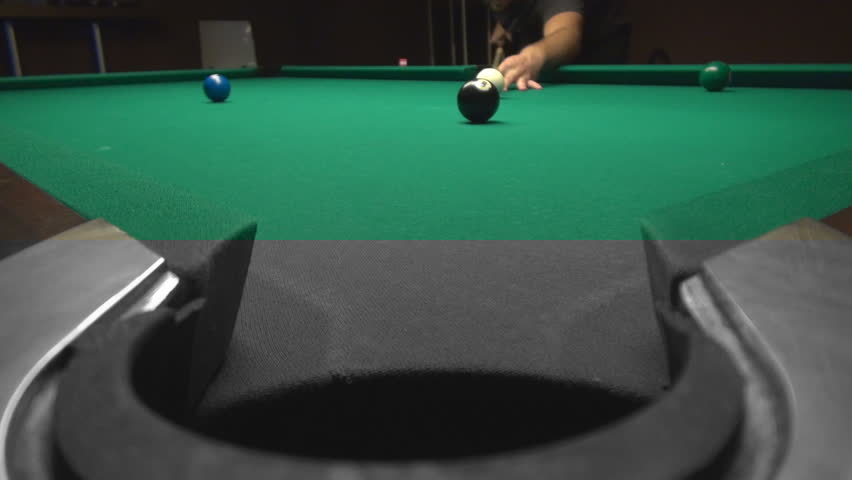
2-on-1 Eight Ball is a variation on the standard 8 ball rules for three players. Two people are on one team and the other player is alone. This variant is also useful if the single player is better than the team or two players. It gives an advantage to the two-person-team.
There is also an option for play when there is a missing object ball, this is useful for occasions where a ball is completely missing, damaged or if the ball was not released by the for-pay table mechanism.
 Equipment:
The basic play is the same as Eight Ball including using a single cue ball. The two-person-team takes turns taking shots. This is different than some team based play where alternating turns are traded. If player A from the two-person-team sinks a ball, then player B from the two-person-team gets his/her the next shot.
Once the two-person-team sinks a ball the additional cue ball is placed on the table on the head spot. From then on, either cue ball may be used by any player. The cue ball hit by the player is the active cue for that shot. The other cue ball is just a dummy ball. It may be hit first without a foul, it may be sunk without a foul. If it is sunk, it is placed on the head spot without penalty and the current player continues their turn, even if no other object ball is sunk. As per normal rules, if the active cue is sunk it is a scratch and the other player/team gets ball in hand. See 7.0 of the official billiard rules.
 If the single-player gets 2 balls ahead of the two-person-team the handicap is activated. In this play both players on the two-person-team take a shot at the same time. Each player chooses a cue ball and they count down and take their shot simultaneously. This requires coordination to avoid unintended consequences. Both cue balls are active so if one is sunk it is a scratch. If both are sunk one is placed on the head spot and the other is ball-in-hand to the other player.
If either or both players sink their object ball the two-person-team continues their turn. Only one object ball needs to be sunk to continue their turn. When there is a single object ball other than the 8 ball left the two-person-team no longer takes simultaneous shots.
Both of the simultaneous shots must be legal shots. Particularly, the cue must first hit an object ball from his/her group and the cue or object ball must hit a rail or the object ball must be pocketed. See 7.3 and 7.4 of the official billiard rules.
The simultaneous shot rule stays in effect for the remainder of the game, even if the single player is no longer ahead by 2 balls.
Special rule for missing object ball: If an object ball is missing the additional cue ball is racked with the other balls. For the break this ball is a stand-in for the missing ball. After the break, either cue may be used as the active cue, the other one is a stand-in for the missing ball. This gives a slight advantage to the team that has the additional cue-ball-stand-in. For this reason, the two-person-team can optionally pre-select that group of balls prior to breaking.
This special rule may optionally be used even if there are no missing object balls. In this case, one of the object balls is swapped for the extra cue in the rack.
 MCToon