In 2016 PBS filmed a documentary over Pyramid lake in Nevada where they did an experiment with a helicopter hovering over the lake, then lowering to see it blocked by the curve of the earth. This wasn’t well executed and the footage was manipulated.
The video was Genius by Stephen Hawking:
https://thinktv.pbslearningmedia.org/resource/hawking_genius_ep06_clip01/where-are-we-ch-1-the-circumference-of-the-earth-genius-by-stephen-hawking/
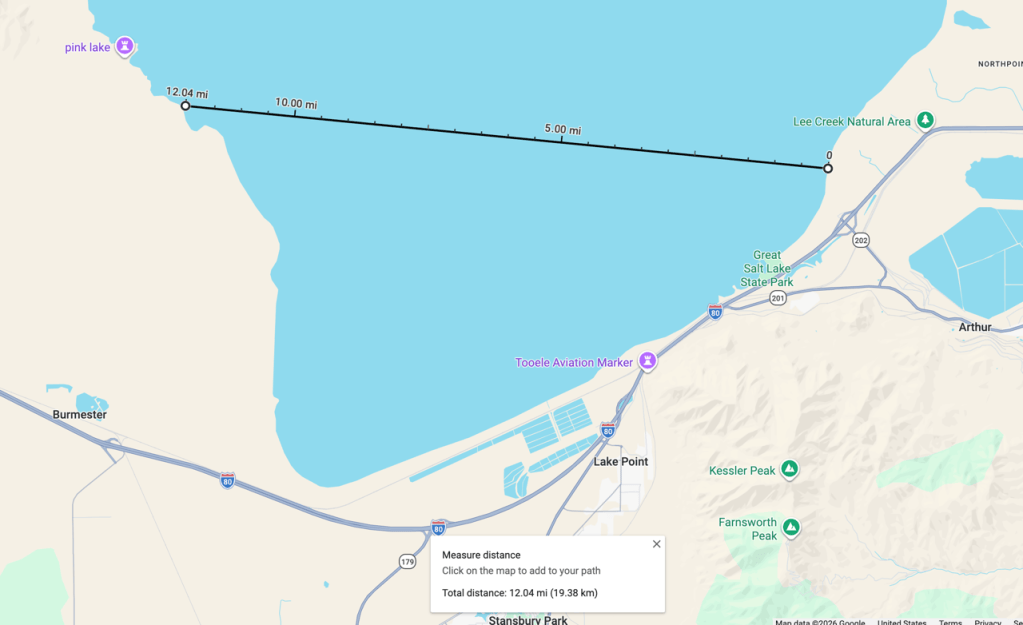
The potential line of sight is to place the camera on the south east coast near the Great Saltair. Then at multiple spots on the south west coast at 6, 8, 10, 12 mile distances to hover the helicopter. Then lower the helicopter to be close to the water or potentially land on the playa right next to the water’s edge.
Considering Local Conditions
The view to the helicopter is affected by the temperature of the air immediately over the water. We want to reduce the effects of refraction over the water so choosing the correct date and time will be helpful.
The lapse rate is the variation in air temperature above the water. Starting at the water’s surface and going up if the temperature stays the same the lapse rate is zero. When the air temperature decreases with elevation there is a negative lapse rate. If the air temperature increases with elevation is it a positive lapse rate.
The lapse rate can vary quite a lot based on the interplay of the water temperature and the surrounding air temperature. This is most prominent in the few meters above the water’s surface. This is the area that most boats are viewed through and often the viewer is also within this zone. Paying close attention to the weather and measuring the lapse rate can assist in more accurately predicting what will be measured or seen.
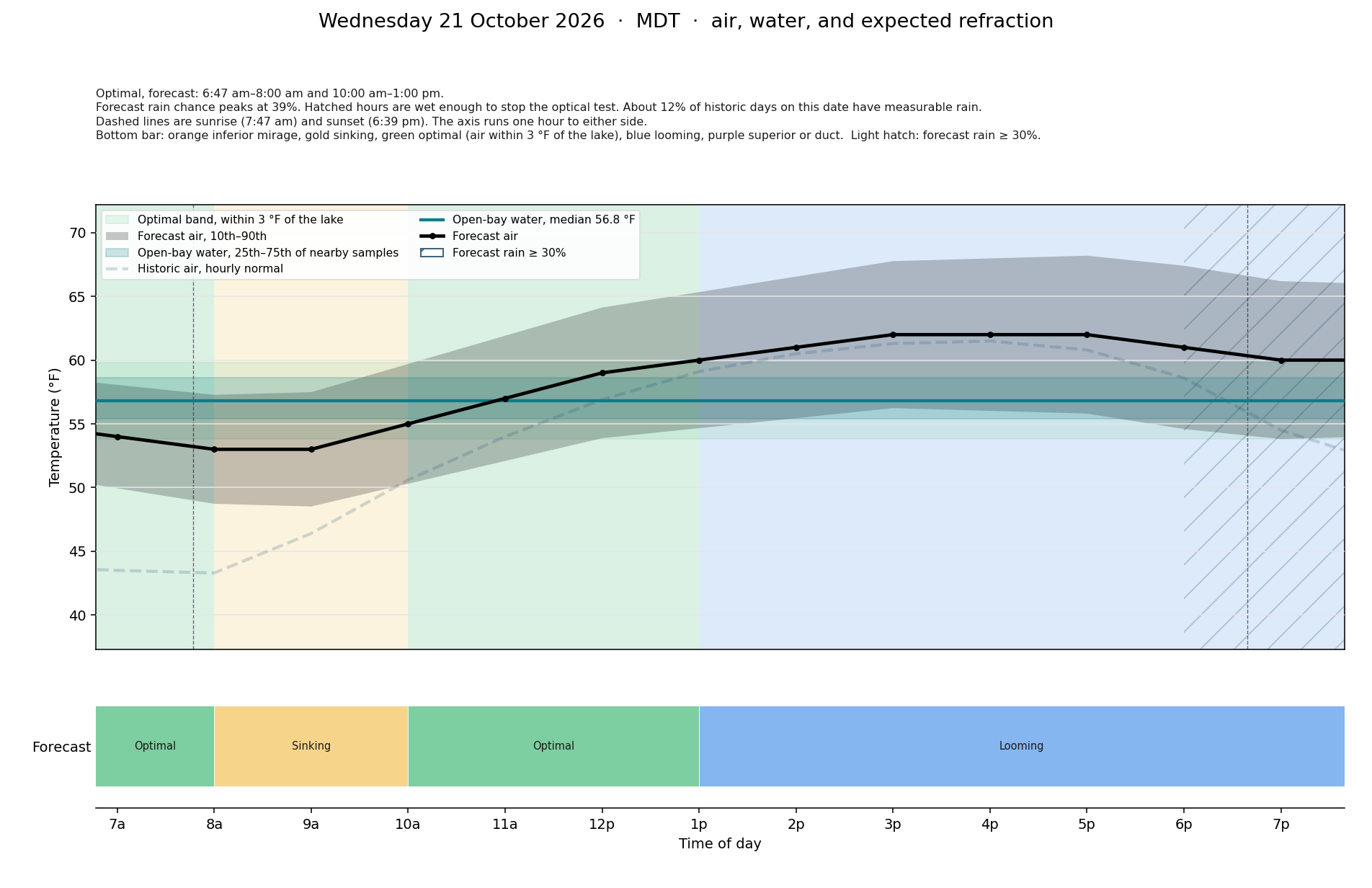
When the water is warmer that the air the layer just above the water can have a negative lapse rate. This can cause an inferior mirage in strong temperature differences or sinking in less extreme conditions.
When the air is warmer than the water this can cause looming and make the objects appear squished.
The preferred conditions is when the air and water are at the same temperature. This would be a zero lapse rate.
Here’s a forecast for Oct 21 showing the current water temperature and the air temperature. This indicates potential looming, sinking, and optimal conditions.
Measuring the Target
In order to get a baseline for measuring the effects of refraction the dimensions of key portions of the helicopter should be measured. We want both height and width. We expect that refractive conditions will not greatly affect the width of the helicopter. However, the height can vary based on refraction. Measuring both the height and the width allows us to get a pixel-meter relationship in the viewing device.

